

Hosting Thanksgiving? Why Your Kitchen Breakers Trip When Every Appliance Runs at Once
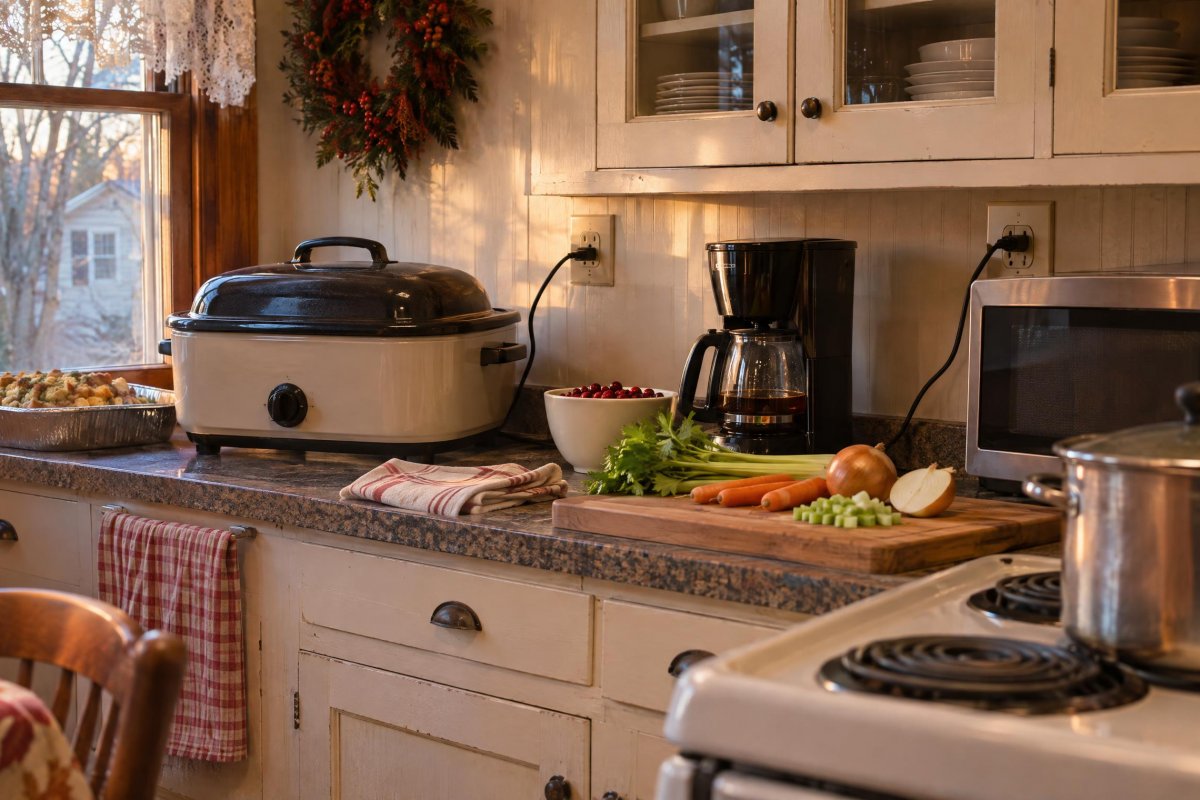
The turkey is in the oven, the coffee maker is brewing, and someone just popped the rolls in the microwave. Then the kitchen goes quiet, and not the good kind of quiet. A breaker tripped, the gravy is half done, and a dozen relatives are asking whether you have a flashlight.
If this sounds familiar, you are not alone. A kitchen packs more electrical demand into one room than any other space in your home, and Thanksgiving is the one day of the year when everything runs at the same time. For homes in Johnson City, Endicott, and across the Greater Binghamton area, many of them decades old, the wiring was simply not planned for today’s appliances.
In this guide, you will learn why kitchen breakers trip, how to plan your cooking day around your circuits, and which warning signs mean it is time to call a pro. Albrite Electric has been a family owned part of this community since 1999, and we have helped plenty of hosts get through the holidays with the lights on.
Why Kitchen Circuits Trip on Cooking Days
Every circuit in your home has a limit. A 15 amp circuit at 120 volts can safely supply about 1,800 watts, and a 20 amp circuit about 2,400 watts. Now consider a typical countertop. A microwave can pull around 1,000 watts, a coffee maker another 1,000, and a toaster oven about 1,200. That is 3,200 watts if all three run together, well past what one 20 amp circuit can carry.
When that happens, the breaker trips on purpose. It is doing its job by cutting power before the wiring overheats. Older homes often have fewer kitchen circuits than modern code calls for, which currently includes at least two 20 amp small appliance circuits serving the countertop outlets. To understand how your panel is organized, see our homeowner’s guide to your electrical panel, and read why circuit breakers trip in more detail.
Plan Your Cooking Day Around Your Circuits
A little planning goes a long way. Here is a simple approach before guests arrive:
- Map your outlets. Turn off one kitchen breaker at a time and see which outlets lose power. Label what you find so you know which appliances share a circuit.
- Spread out the load. Put the slow cooker, warming tray, or roaster in the dining room or another room on a different circuit.
- Stagger the big draws. Run the microwave while the toaster oven is off, not at the same time.
- Plug heating appliances directly into the wall. Avoid power strips and long cord runs. Our post on extension cord and power strip safety explains the risks.
- Do not swap in a bigger breaker. The breaker protects the wire behind the wall, and a larger one on thin wire is a fire hazard.
If your home still has a fuse box, a blown fuse tells the same story. We explain why more homeowners are making that switch in our post on fuse box replacement.
Signs It Is More Than Holiday Overload
One tripped breaker on the busiest cooking day of the year is usually just a lesson in load. But some signs point to a problem that needs attention before the next gathering:
- A breaker that trips with only one or two appliances running
- Outlets that feel warm, look discolored, or buzz
- A burning or hot plastic smell, which our guide on burning smells from an outlet covers in depth
- Lights that dim when the microwave or oven starts
- A breaker that will not stay reset
While these signs sound serious, they are very fixable for a licensed electrician.
Permanent Fixes That Make Hosting Easier
If your kitchen struggles every holiday, the lasting solution is usually more circuits, not fewer appliances. Our electricians can add dedicated circuits for the microwave, dishwasher, and countertop appliances through circuit breaker installation and upgrades, and add extra outlets where you actually use them. GFCI protection near the sink is another smart upgrade, and our GFCI outlet installation service handles it.
If your panel is full or outdated, an electrical panel upgrade opens the door to new circuits. Planning a kitchen refresh? Read our checklist on the electrical work that has to happen first.
When to Call a Professional
Call a licensed electrician if breakers trip on a regular basis, outlets show heat damage, or you cannot run basic appliances without losing power. Never open your panel or replace breakers yourself. Homeowners in Johnson City and Endicott trust our team, and you can learn why Albrite Electric is the local choice.
Common Questions About Kitchen Circuit Overload
With a little planning, your kitchen can handle the holiday rush without a single tripped breaker. Map your circuits, spread out the load, and if the problem keeps coming back, let us fix it for good. Call Albrite Electric at (607) 748-2105 or request an estimate online.
Serving Johnson City, Endicott, Binghamton, and the surrounding Southern Tier with pride and professionalism. Call (607) 748-2105 today, and enjoy the holiday meal.