

Understanding Your Electrical Panel: A Homeowner's Guide to Breakers, Labels, and When to Call an Electrician
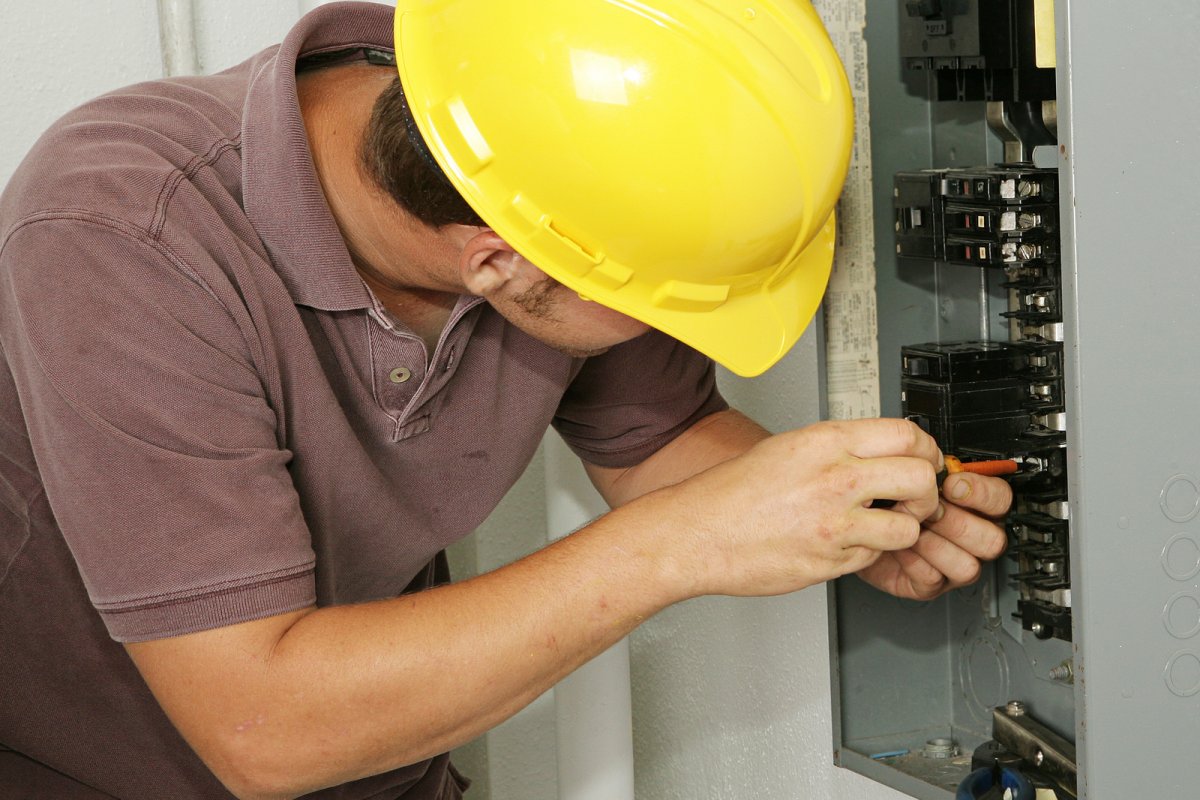
It’s usually the same story: the power in part of your home goes out, you head to the basement or utility room, open a metal panel door you’ve mostly ignored for years, and stare at two columns of switches — some of which are labeled in handwriting so faded you can’t read it, and a few that aren’t labeled at all. You flip what you think is the right one, power comes back, and you close the door and go back to whatever you were doing.
Sound familiar? You’re not alone. The electrical panel is one of the most important systems in your home, and also one of the least understood. For Greater Binghamton homeowners — many of whom live in homes with panels that are decades old — knowing what your panel is telling you can be the difference between a minor inconvenience and a serious safety issue.
This guide breaks down how your electrical panel works, what the different components do, and how to recognize when something needs professional attention.
What Your Electrical Panel Actually Does
Your electrical panel — also called a breaker box or load center — is the central distribution point for all the electricity in your home. Power comes in from your utility (in Greater Binghamton, that’s typically NYSEG) through the meter and into the panel, where it’s divided and distributed to individual circuits throughout your home through circuit breakers.
Each circuit breaker in the panel serves a specific circuit — a group of outlets, lights, or a single large appliance — and acts as both a switch and a safety device. When a circuit draws more current than it’s rated for, the breaker “trips” and cuts power to that circuit. This is a protection mechanism, not a problem in itself — but a breaker that trips repeatedly is telling you something worth paying attention to.
At the top of the panel are one or two large breakers called the main breaker. This controls power to the entire panel and allows you to cut all power to your home at once — useful during emergencies and when working on electrical systems.
Reading Your Panel: Breakers, Amperage, and Labels
Every breaker in your panel has an amperage rating printed on it — typically 15 or 20 amps for general household circuits, and higher (30, 40, 50, or 60 amps) for large appliances like electric dryers, water heaters, EV chargers, and HVAC systems. The rating tells you how much current that circuit can safely carry before the breaker trips.
A 15-amp breaker is standard for most lighting circuits and general outlet circuits. A 20-amp breaker is common in kitchens, bathrooms, and other areas where higher-draw appliances are used. If you have an electric range, it likely has its own dedicated 50-amp double-pole breaker. This is what a dedicated circuit looks like in your panel — a breaker reserved exclusively for one high-demand load.
Labeling is one of the most important — and most commonly neglected — aspects of panel maintenance. Every breaker slot should be clearly labeled so you can identify which circuit it controls without having to guess. If your panel’s directory is incomplete or illegible, this is worth correcting. A licensed electrician can perform a panel audit, properly label all circuits, and document what’s connected where.
Common Warning Signs That Need Professional Attention
Your electrical panel communicates problems through a few recognizable signs. Knowing what to watch for can help you catch issues before they become emergencies.
Frequently tripping breakers are the most obvious sign that something is off. An occasional trip when you run too many things at once on a kitchen circuit is normal. A breaker that trips regularly, trips under normal load, or won’t reset and hold is telling you the circuit is overloaded, there’s a wiring problem, or the breaker itself has failed. Our post on why circuit breakers trip covers this in detail.
Burning smells, scorch marks, or discoloration on or around the panel are serious warning signs that should prompt an immediate call to an electrician. These can indicate arcing, overheating, or loose connections inside the panel — conditions that can lead to electrical fires.
Buzzing, crackling, or humming sounds from the panel are not normal. A slight hum from large transformers nearby can be normal, but sounds coming from inside the panel itself suggest loose connections or failing breakers.
Breakers that feel warm or hot to the touch indicate that the breaker or the wiring connected to it is running at or beyond its rated capacity. This is a sign to call a professional, not to simply reset the breaker and move on.
An older panel brand with known issues is worth having evaluated regardless of whether you’re experiencing problems. Federal Pacific Electric (Stab-Lok) panels and Zinsco panels, both common in homes built between the 1950s and 1980s, have documented histories of breakers that fail to trip properly under fault conditions. If your panel bears either of these names, an electrical panel upgrade is worth discussing with a licensed electrician.
How to Know If Your Panel Needs an Upgrade
Not every older panel needs immediate replacement, but there are clear indicators that an upgrade is overdue. If your home has a 100-amp service and you’ve added significant electrical loads over the years — central air conditioning, an EV charger, a home office, or major appliances — your panel may simply be undersized for modern demand. Most electrical professionals recommend a minimum of 200-amp service for homes with contemporary electrical needs.
If you’re regularly running out of breaker slots and using tandem (double-stuff) breakers to add circuits, that’s a sign your panel has reached its practical limit. Adding circuits beyond design capacity can reduce safety margins. Our post on telltale signs it’s time to replace your panel covers the full checklist in detail.
A professional electrical inspection is the best way to get an objective assessment of your panel’s condition and capacity. Our team provides thorough inspections for homeowners throughout Binghamton, Vestal, Endwell, Endicott, and the surrounding communities.
When to Call a Professional
You can and should reset a tripped breaker on your own — that’s what it’s there for. But anything beyond that basic action deserves professional attention. Don’t open the panel cover and work on breakers, connections, or wiring yourself. The interior of an electrical panel carries live voltage even when the main breaker is turned off (the wires entering the panel from the utility are always hot), and working in this environment without proper training and equipment creates serious risk of electrocution.
If you’re experiencing repeated trips, strange sounds, smells, or warmth around the panel, or if your home’s electrical service is more than 25–30 years old and has never been evaluated, it’s time to call. Early attention to panel issues is almost always less expensive than dealing with the consequences of ignoring them.
A tripped breaker sits in a middle position between “On” and “Off” — it won’t be fully in either direction. To reset it, first turn it fully to the “Off” position until you feel it click, then flip it back to “On.” If the breaker trips again immediately or shortly after resetting, don’t keep resetting it — that’s a sign of an underlying problem that needs professional diagnosis. Repeated tripping of the same breaker is one of the situations covered in our post on why circuit breakers trip.
Look at the main breaker at the top of your panel — it will be labeled with an amperage rating, most commonly 100 or 200 amps. A 100-amp service was standard for decades but is generally considered undersized for a modern home with central air conditioning, electric appliances, and other high-draw loads. If you’re planning to add an EV charger, a hot tub, or significant new circuits, a 100-amp service will almost certainly need to be upgraded. Our electrical and meter upgrade service addresses exactly these situations. A free estimate will tell you where you stand.
A double-pole breaker takes up two slots in your panel and controls a 240-volt circuit, which is used for large appliances like electric dryers, water heaters, air conditioners, and EV charging stations. It looks like two single breakers joined together. When a 240-volt double-pole breaker trips, both sides trip together. Our circuit breaker installation and upgrade service covers both standard and double-pole breaker work.
Most electrical panels are designed to last 25–40 years under normal conditions, though the breakers inside can fail earlier. Panels that are older than 25 years or that have never been inspected are worth having evaluated by a licensed electrician, especially if you’ve never had electrical work done since moving in. Age alone isn’t necessarily a reason to replace a panel — but age combined with any of the warning signs mentioned in this post is. Schedule a free estimate if you have any concerns about your panel’s age or condition.
Fuse boxes are an older technology that predate modern circuit breakers. While a properly maintained fuse box with the correct fuses installed can function safely, they have significant limitations: fuses that have been replaced with higher-amperage fuses than the circuit is rated for (a common DIY “fix” for nuisance blowing) create serious fire risk. Fuse boxes also can’t accommodate modern circuit requirements like AFCI protection. Most insurance companies and lenders in New York require upgrading a fuse box to a modern breaker panel. Contact us at (607) 748-2105 if your home still has a fuse box.
Your electrical panel is your home’s first line of defense against electrical hazards — but only if it’s in good condition and properly sized for your home’s needs. If you haven’t had your panel looked at recently, or if you’re seeing any of the warning signs described above, call Albrite Electric at (607) 748-2105 or request a free estimate online. We serve Binghamton, Endwell, Vestal, Endicott, and all of Greater Binghamton — and we’re always happy to answer questions about what’s going on in your panel.