

Still Have a Fuse Box? Why Southern Tier Homeowners Are Replacing Them Before Winter
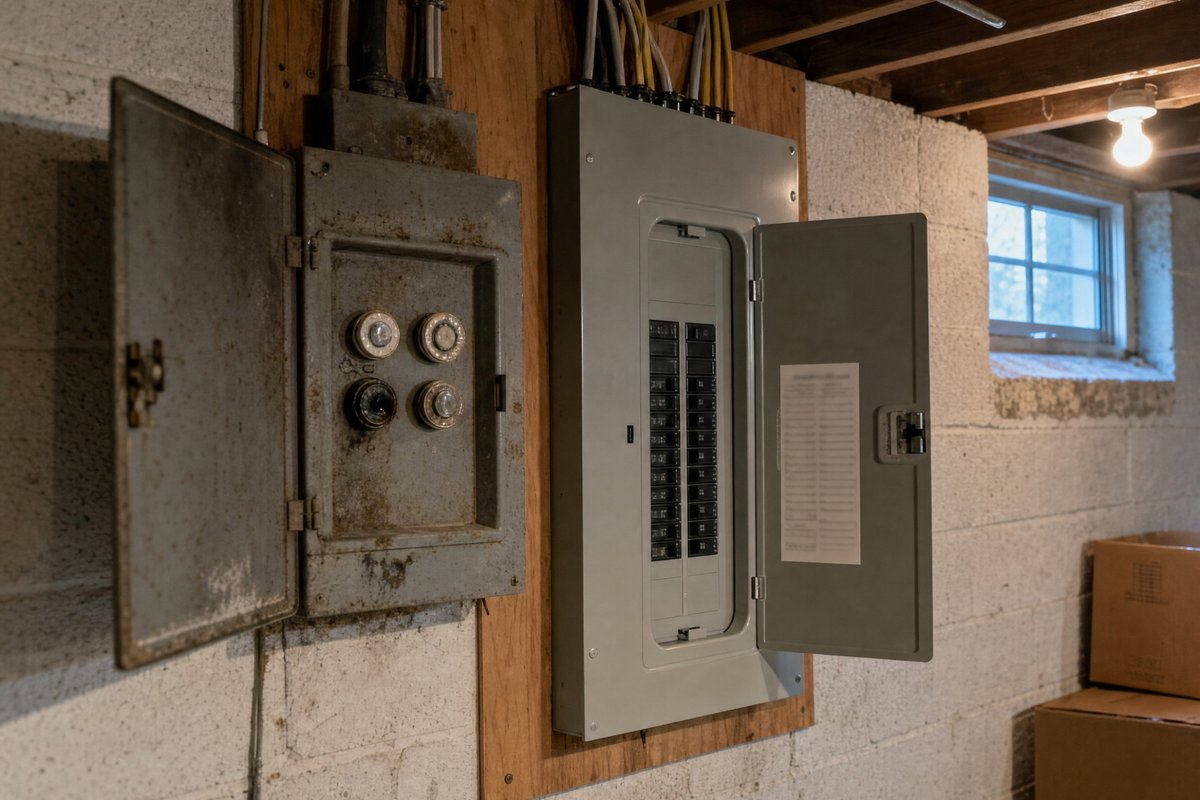
Picture this: it’s the first cold snap of the season in your Johnson City bungalow. The furnace kicks on, you start the dryer, and the kitchen goes dark. You head to the basement, unscrew a blown fuse, and wonder if a bigger one might fix the problem for good. It won’t, and that instinct is exactly why fuse boxes deserve a closer look.
Fuse boxes powered American homes for decades, and plenty of houses across the Greater Binghamton area still have one. They suited the way families used electricity in the 1940s and 1950s. They weren’t built for today’s furnaces, kitchens, and home offices. In this post, we’ll cover why fuse box replacement in Binghamton is on so many homeowners’ lists, what the work involves, and why October is a smart time to do it.
Albrite Electric has served Binghamton, Vestal, Endwell, and Endicott since 1999, so we’ve seen what aging fuse panels do to busy households.
Why a Fuse Box Falls Short in a Modern Home
A fuse protects a circuit by melting when too much current flows through it. Once it blows, it has to be replaced. That simple design comes with some real limitations today.
- Limited capacity: Many fuse panels are fed by 60 amp service, while most modern homes need 100 to 200 amps to run ranges, dryers, and electronics at the same time.
- Easy to defeat: A 30 amp fuse in a 15 amp socket, or a penny behind the fuse, removes the protection and lets wires overheat inside your walls.
- No modern safety features: A breaker panel can include GFCI and AFCI protection, which guard against shock and arcing wires. A fuse box can’t.
- Insurance and resale friction: Some insurers decline coverage or charge more for fuse panels, and home inspectors flag them right away.
Fuse boxes also tend to travel with other aging wiring. If your home has one, it’s worth checking for knob and tube wiring too. Our guide to signs it’s time to replace your electrical panel covers the broader warning signs.
Signs It’s Time to Replace Your Fuse Box
Not sure whether yours has reached its limit? These are the most common red flags:
- Fuses blow regularly, especially when you run the dryer, microwave, or a space heater
- You’ve been tempted to swap in a larger fuse
- Lights dim when the furnace or a major appliance starts up
- You rely on extension cords because rooms don’t have enough outlets
- The panel feels warm, shows scorch marks, or smells like something is burning
- You want to add a range, hot tub, or EV charging station and the panel can’t support it
If two or more of these sound familiar, an inspection is the right next step. Our home electrical inspection guide explains what to expect.
What Fuse Box Replacement in Binghamton Actually Involves
The process is more routine than most homeowners expect. Here’s how it typically goes:
- Assessment: We review your panel, service size, and the loads you actually run. A load calculation makes sure the new panel is sized correctly.
- Permits and coordination: We handle permitting where required and work with NYSEG on the utility side. In the City of Binghamton, permitted panel work goes through a licensed master electrician and the Building and Code Enforcement office.
- Installation: We mount a new electrical panel, move each circuit to a labeled breaker, and correct any damaged or undersized wiring we find. Power is typically off for part of a day.
- Inspection and power restoration: Once the work passes inspection, your power comes back on with a panel built for the next few decades.
Many homeowners add whole house surge protection during the same visit, since the panel is already open. If your service line or meter needs attention, our electrical and meter upgrade team handles that too. Cost depends on panel size, location, and wiring condition, so we provide a written estimate before any work begins.
Why October Is the Right Time to Switch
Heating season is when fuse boxes work hardest. Furnace blowers, space heaters, and holiday cooking all add load at once, and a panel running on the edge tends to fail at the worst moment. Scheduling in fall helps you avoid winter storm backlogs.
A modern panel also prepares your home for the future. If you’ve considered a Generac home standby generator, a current breaker panel makes whole house generator installation far more straightforward.
When to Call a Professional Right Away
Some situations shouldn’t wait for a convenient appointment. Call a licensed electrician immediately if you notice a burning smell near the panel, fuses that blow again right after replacement, scorched fuse holders, or a panel that feels hot. Never open the panel yourself, and never install a larger fuse as a quick fix. Our guides on burning smells from outlets and how to tell when it’s an electrical emergency can help you judge how urgent your situation is.
Common Questions About Fuse Box Replacement
Make the Safe Switch Before Winter
A fuse box doesn’t have to be an emergency waiting to happen. Replacing it gives your family reliable power, built in safety protection, and fewer headaches with insurers and buyers. Albrite Electric’s licensed, insured, family owned team will explain your options in plain language, with no pressure.
Ready to talk about fuse box replacement in Binghamton? Call (607) 748-2105 or request an estimate online. Want to hear from neighbors first? Read our customer testimonials. We proudly serve homeowners in Johnson City, Endicott, and throughout the Greater Binghamton area.