

What Is a Load Calculation and Why It Matters Before Any Major Electrical Upgrade
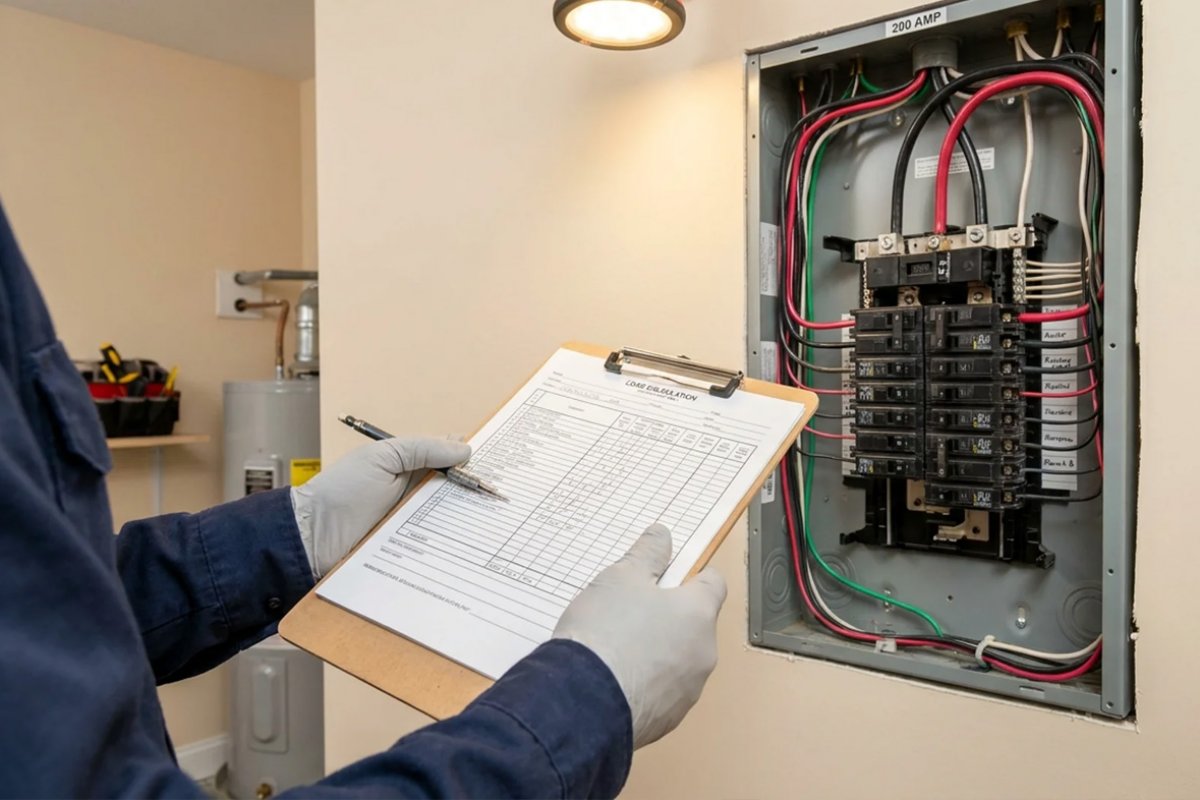
You’ve decided it’s time for a serious electrical upgrade. Maybe you want to add an EV charger, install a whole house generator, or finally get your panel replaced after years of nuisance breaker trips. You call a licensed electrician and one of the first things they mention is a load calculation. What exactly is that, and why does it matter before anything gets installed?
A load calculation is one of the most important steps in planning any major electrical upgrade, yet most homeowners have never heard of it. In plain terms, it’s how an electrician figures out how much power your home actually needs right now, and how much capacity you’ll need to support what you want to add. Without this step, there’s no reliable way to know whether your existing panel is adequate, what size panel you’d need to replace it, or how many circuits your system can safely handle. This post will explain the concept in plain language so you know exactly what to expect when an electrician brings it up.
What a Load Calculation Actually Measures
Every appliance, lighting circuit, outlet, HVAC system, and major device in your home draws a certain amount of electrical power, measured in watts or amps. A load calculation adds all of those demands together to determine your home’s total electrical load. Electricians follow guidelines established by the National Electrical Code (NEC) to perform this calculation accurately and consistently.
The calculation accounts for two types of loads. The first is your continuous load—things like HVAC equipment, water heaters, and refrigerators that run for extended periods. The second is your non-continuous load—devices that cycle on and off throughout the day. The NEC requires that panels and circuits be sized to handle 125% of any continuous load, which is why a properly sized panel often looks “bigger” than your current usage might suggest.
A licensed electrician performing a load calculation will also factor in the square footage of your home, the number of small appliance circuits in your kitchen, laundry equipment, and any specialized circuits like those for a hot tub, EV charging station, or home workshop.
Why It Matters for a Panel Upgrade
One of the most common reasons homeowners in the Greater Binghamton area schedule an electrical panel upgrade is that their existing panel no longer keeps up with the home’s demands. But simply replacing an old 100-amp panel with a new 100-amp panel isn’t always the right answer. If your home’s calculated load now exceeds that capacity—which is common in homes that have added central air conditioning, additional appliances, or a home office since the panel was originally installed—you need a larger panel, not just a newer one.
The load calculation tells your electrician exactly what size panel is appropriate. For most modern homes in the Southern Tier, a 200-amp service is standard. Homes with significant electrical demands—electric heat, multiple EV chargers, or large workshop equipment—may need 400-amp service. Getting this right upfront saves you from the frustration and expense of upgrading again in a few years.
Our post on understanding your electrical panel is a helpful read if you want to get familiar with how panels work before scheduling an inspection.
How Load Calculations Connect to Other Upgrades
Generator sizing. When you install a whole house generator, your electrician needs to know your total electrical load to recommend the right generator capacity. Installing a generator that’s too small for your home means you’ll have to shed loads manually during an outage, defeating much of the purpose. Our generator sizing guide goes deeper on this topic, and it all starts with the same load calculation data.
EV charger installation. Adding a Level 2 EV charger at home typically requires a dedicated 50-amp, 240-volt circuit. Whether your existing panel can accommodate that without an upgrade depends entirely on what the load calculation reveals. If you’re planning to charge two vehicles eventually, that needs to be factored in from the start.
Dedicated circuits for appliances. Whether you need a dedicated circuit for a new appliance or a home workshop, the load calculation tells your electrician how much capacity remains in your panel before the addition pushes you over the limit.
Smart home upgrades. If you’re planning to integrate smart home technology throughout your house, the cumulative electrical demands of those systems matter too. A load calculation ensures there’s room in your panel for everything you want to add.
What Happens If a Load Calculation Is Skipped
Skipping this step is rarely catastrophic immediately, but it creates problems down the road. An undersized panel runs hotter, trips more frequently, and may not meet code requirements for the work being performed. In some cases, a panel that was sized without proper calculation will fail inspection, requiring the work to be redone.
Beyond inspections, an improperly sized panel can cause real safety issues. Overloaded panels are one of the leading causes of electrical fires in older homes. The signs that a panel needs replacement are worth reviewing if you’re not sure whether yours is keeping up.
At Albrite Electric, every major upgrade project begins with a thorough assessment of your home’s existing electrical system. We serve homeowners throughout the Greater Binghamton area, including Vestal, Endicott, Endwell, and Johnson City, and we’re happy to explain every step of the process before any work begins. You can learn more about electrical and meter upgrades on our service page, or request a free estimate online.
Frequently Asked Questions About Electrical Load Calculations
For a typical single-family home, a licensed electrician can usually complete a load calculation in under an hour. It involves reviewing your panel, identifying your major appliances and circuits, and doing the math according to NEC guidelines. It’s typically done as part of a pre-upgrade consultation rather than as a standalone appointment.
Rough estimates are possible using appliance wattage charts, but an accurate load calculation that meets NEC requirements and will pass inspection needs to be performed by a licensed electrician. There are nuances in how certain loads are calculated—like applying the 125% multiplier to continuous loads or accounting for demand factors on large appliance circuits—that require professional training to get right.
Yes. A 200-amp panel has a maximum capacity, and how much of that capacity is already spoken for depends on what’s already installed in your home. It’s entirely possible for a 200-amp panel to be near its limit before an EV charger is added. A load calculation tells you exactly where you stand and whether the addition requires a panel upgrade or simply a new circuit.
Yes. When you schedule a free estimate with Albrite Electric for a panel upgrade, generator installation, EV charger, or similar project, we assess your home’s electrical load as part of that process. You’ll get a clear picture of what your system can currently handle and what upgrades make sense for your goals. Call us at (607) 748-2105 to get started.
Understanding what your home’s electrical system can handle is the foundation of every smart upgrade decision. The team at Albrite Electric has been helping Greater Binghamton homeowners make those decisions with confidence since 1999. Call us at (607) 748-2105 or request your free estimate online and let’s talk through what you’re planning.