

Is Your Older Binghamton Home Ready for Window AC Units? What You Need to Know Before Plugging In
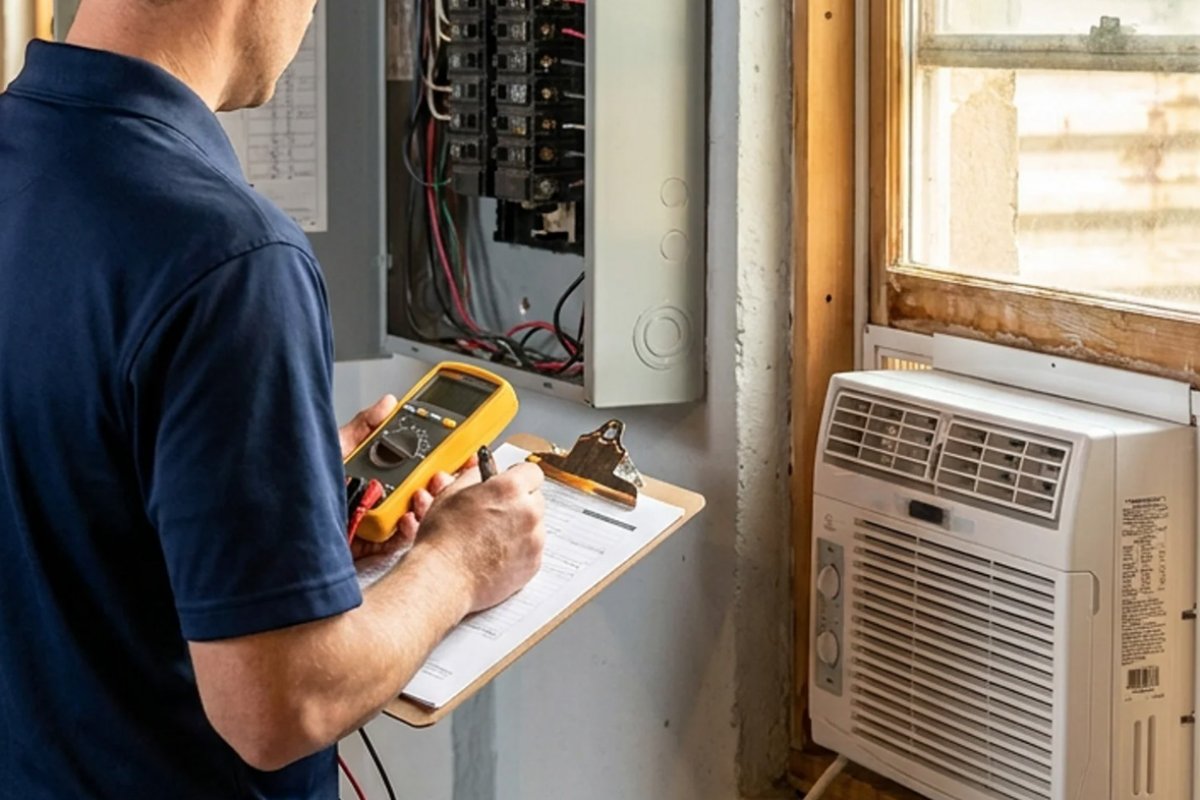
July in the Greater Binghamton area means heat, humidity, and the annual ritual of hauling window air conditioners out of storage. For homeowners in older neighborhoods like Endwell, Johnson City, and the West Side of Binghamton, that ritual also comes with a risk most people never think about: plugging a high-draw appliance into a circuit that was never designed to handle it.
Older homes throughout the Southern Tier were wired long before window AC units existed. The circuits in those homes were sized for the modest electrical demands of their era, and they haven’t always been updated to match how we live today. In this post, we’ll walk you through what your electrical system actually needs to run window air conditioners safely, what warning signs to watch for, and when it’s time to call a licensed electrician before a tripped breaker turns into something worse.
Why Window AC Units Are Hard on Older Electrical Systems
A standard window air conditioner draws between 500 and 1,500 watts of power during normal operation, but that number spikes significantly the moment the compressor kicks on. That startup surge—sometimes two to three times the running wattage—hits your circuit all at once, and older wiring often struggles to absorb it cleanly.
In many Binghamton area homes built before the 1970s, bedroom and living room circuits were wired at just 15 amps. That’s enough for lights, a lamp, and a few small devices. It is not enough for a window AC unit running alongside everything else already plugged in on that circuit. When you exceed a circuit’s capacity, the breaker trips. When the breaker is old or the wiring is degraded, the consequences can be more serious than a nuisance outage.
If your home has aluminum wiring or original wiring that hasn’t been updated, the risks are compounded. Older wiring insulation becomes brittle over time, and repeated overloads accelerate that wear significantly.
The Right Solution: Dedicated Circuits for Air Conditioners
The safest way to run a window air conditioner in an older home is on a dedicated circuit—a circuit that serves only that one appliance and nothing else. A dedicated circuit eliminates the competition for power that causes overloads, and it gives your air conditioner the clean, stable supply of electricity it needs to run efficiently.
Most window AC units rated above 7,500 BTUs should be on a dedicated 20-amp, 120-volt circuit. Larger units—12,000 BTUs and above—may require a 240-volt circuit. An outlet installation for a dedicated AC circuit is a straightforward job for a licensed electrician, and it makes a real difference in both safety and performance.
It’s also worth checking whether your panel can support the additional circuits. Many older homes in the Greater Binghamton area are running on panels that were never upgraded from their original capacity. If your electrical panel is already close to capacity, adding circuits for air conditioners may require a panel upgrade at the same time. A licensed electrician can assess this quickly during an inspection.
Warning Signs That Your Electrical System Is Struggling
Your home will usually tell you when something is wrong. The challenge is knowing how to read those signals before they become emergencies. Here are the most common signs that your electrical system isn’t handling your window AC units well:
- Breakers that trip every time the AC compressor kicks on. This is the clearest sign that a circuit is overloaded. A breaker that trips repeatedly is doing its job, but the underlying problem still needs to be fixed.
- Lights that dim or flicker when the AC starts up. That momentary dip in power is caused by the startup surge pulling more current than the circuit can smoothly deliver. It’s a sign of an undersized or overloaded circuit.
- Outlets that feel warm to the touch near the AC unit. Heat at an outlet is a warning sign of excess resistance in the wiring or a connection that is working too hard.
- A burning smell coming from the outlet or wall. This is a serious red flag. Turn off the air conditioner immediately and call a licensed electrician. Do not use that outlet again until it has been inspected.
- Breakers that won’t reset or trip immediately after being reset. This usually means the circuit is still overloaded, or the breaker itself has been damaged by repeated trips and needs to be replaced.
If you’re seeing any of these signs, don’t ignore them. Our post on why circuit breakers trip goes deeper on what each scenario means and when it requires professional attention.
What About Using Extension Cords and Power Strips?
One of the most common workarounds homeowners try is plugging a window AC unit into an extension cord or a power strip. Please don’t do this. Air conditioners draw too much current for standard extension cords, which are not rated for sustained high loads. Running an AC unit through an extension cord creates a real risk of the cord overheating, melting, or starting a fire.
If your only outlet near the window isn’t adequate for the job, the right answer is having a properly rated outlet installed in the right location. Our post on extension cord and power strip safety covers this in more detail, including which situations are genuinely dangerous and which are simply inconvenient.
When to Call a Licensed Electrician
Some electrical questions have easy answers. Whether your home can safely run multiple window air conditioners is not one of them. The answer depends on your panel capacity, the age and condition of your wiring, how your existing circuits are distributed through the house, and which outlets are on which circuits. A licensed electrician can figure all of this out in a single inspection visit.
At Albrite Electric, we’ve been helping homeowners across the Greater Binghamton area sort out exactly these kinds of situations since 1999. Whether you need a circuit breaker upgrade, a dedicated circuit added for an air conditioner, or a full electrical panel upgrade to bring your home up to its current demands, we’ll give you an honest assessment and a clear plan. You can also review our home electrical inspection guide to understand what that process looks like.
Homeowners in Endwell, Vestal, Endicott, and Johnson City can learn more about how we serve their communities on our Endwell, Vestal, Endicott, and Johnson City service pages.
Frequently Asked Questions About Window AC Units and Home Electrical Systems
Smaller window AC units (under 7,500 BTUs) can often run on a standard 15 or 20 amp, 120-volt outlet, as long as that circuit isn’t already loaded with other devices. Larger units require a dedicated circuit or a 240-volt outlet. The safest approach in any older home is to have a licensed electrician verify what your existing circuits can safely handle before you plug anything in.
The cost varies depending on how far the new circuit needs to run from your panel, whether the panel has open slots, and the type of circuit required. A basic dedicated 20-amp circuit typically runs a few hundred dollars installed. If a panel upgrade is also needed, the overall cost will be higher. We provide transparent, upfront estimates before any work begins. You can request an estimate online or call us at (607) 748-2105.
A tripping breaker is your electrical system protecting itself from an overload, so in the short term it is doing its job. But a circuit that trips repeatedly is telling you that something needs to change. Continuing to reset the breaker without addressing the underlying cause can lead to breaker wear or, in older systems, overheating. Have a licensed electrician take a look so you understand what is actually happening on that circuit.
That depends entirely on your panel capacity and how your home’s circuits are laid out. There is no universal answer. An electrician can review your panel, map your existing circuits, and tell you exactly how many units your system can safely support. If your current setup isn’t adequate, adding circuits or upgrading your panel is a straightforward solution that gives you long-term flexibility.
Don’t let an overloaded circuit turn a hot July day into a real emergency. The team at Albrite Electric is here to make sure your home is ready for summer. Call us at (607) 748-2105 or request your free estimate online. We’ll take a look at what you’re working with and give you a clear path forward—no pressure, no surprises.