

Hanging Holiday Lights This Year? The Outdoor Electrical Checks to Make Before You Plug In
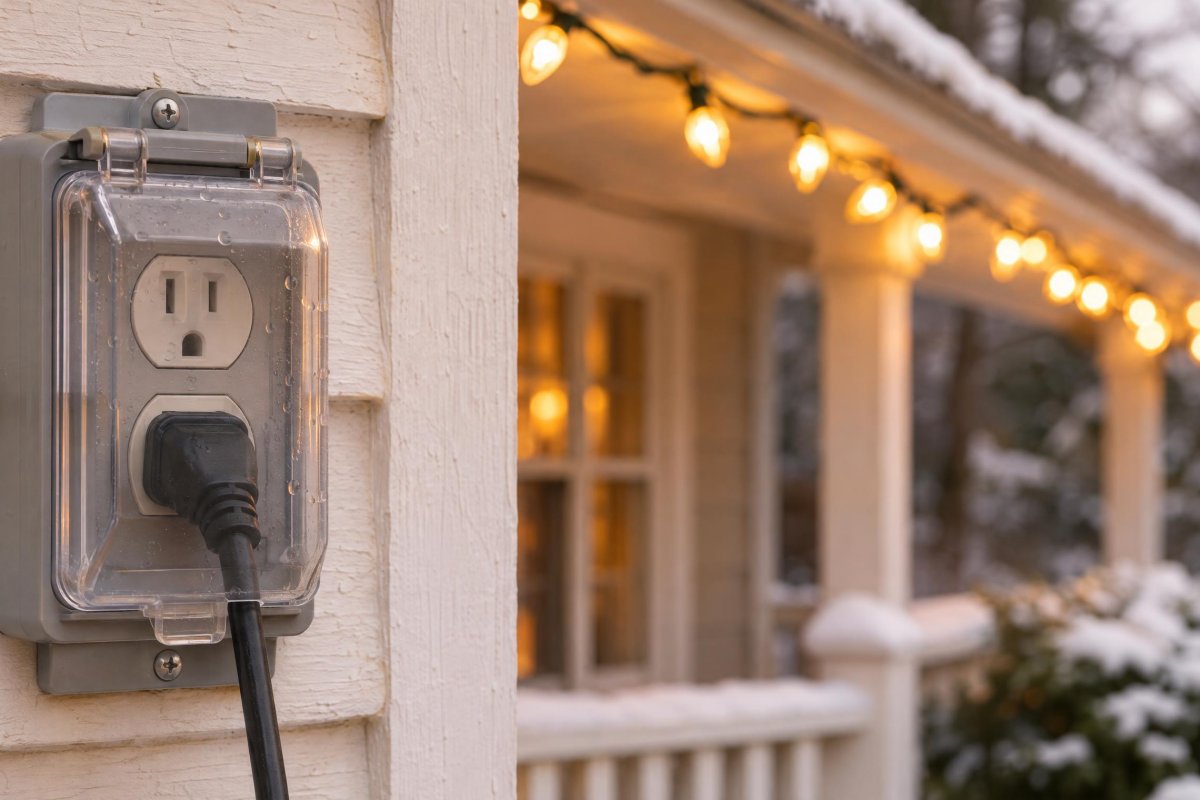
It starts the same way every year. The weekend after Thanksgiving, someone drags a tangle of lights out of the garage, climbs a ladder in the cold, and runs an orange cord through a window to the only outlet anywhere close. It works great, until the breaker trips, the cord freezes into a snowbank, or the whole display goes dark on the first rainy night.
Holiday lighting is one of the most common reasons homeowners in Binghamton, Vestal, and Endwell start asking about outdoor electrical safety. Snow, ice, and freezing rain are hard on cords and connections, and many older homes simply do not have the outdoor outlets or protection that a big display needs.
In this guide, we will walk through the checks worth making before you plug in, how to tell when your display is asking too much of your wiring, and when it is time to call a licensed electrician. Albrite Electric has served the Greater Binghamton area as a family owned company since 1999, and we would much rather help you enjoy the lights than answer an emergency call.
Start With the Outlet, Not the Lights
Outdoor circuits take the worst of our winters. Look at the outlet you plan to use. It should have a weatherproof “in use” cover, the kind with a hinged bubble lid that stays closed over a plugged in cord. A flat cover or a cracked one lets moisture into the box, which is exactly where you do not want it. If you are not sure what you need, our guide to outdoor outlet installation explains what a proper setup looks like.
That outlet should also be GFCI protected. A GFCI outlet, the kind with the test and reset buttons, shuts off power in a fraction of a second if it senses current leaking where it should not, like through a wet cord. Press test, confirm the power cuts off, then press reset. If it will not reset, or never trips at all, it needs to be replaced. Our GFCI and AFCI outlet guide covers how these devices work.
No outdoor outlet at all? Feeding a cord through a cracked window or a garage door is not a fix. A licensed electrician can add a weather resistant outlet right where you hang lights. Learn more about our outlet installation and GFCI outlet installation and replacement services.
Know What Your Circuit Can Handle
A standard 15 amp circuit at 120 volts can supply about 1,800 watts, and a 20 amp circuit about 2,400 watts. The label on each string of lights lists its wattage, and the packaging usually states how many strings can be connected end to end. Add everything up before you plug in. LED strings use far less power than older incandescent ones, which makes switching the easiest way to add more lights without overloading anything.
Keep in mind that your outdoor outlet may share a circuit with the garage, a bathroom, or even a bedroom. If decorating keeps tripping the breaker, do not just keep resetting it. Read our post on why circuit breakers trip to understand what the breaker is telling you.
Your Pre Plug In Checklist
- Use only lights and cords rated for outdoor use, and check the label.
- Inspect every strand for cracked insulation, bent prongs, or loose sockets. Toss anything damaged.
- Keep plugs and connections off the ground and out of snow, ideally inside a covered box or raised on a hook.
- Use plastic clips made for lights. Never staple, nail, or tack through a cord.
- Avoid chaining extension cords together. Our post on extension cord and power strip safety explains why.
- Turn lights off at bedtime and when you leave the house, or put them on an outdoor rated timer.
Timers, Inflatables, and Permanent Options
Outdoor rated timers save energy and keep lights from running all night. Inflatables are different because their fans run constantly, so give them their own outlet where possible and keep the connection covered and dry.
If you hang lights every year, consider a more permanent setup: an outlet under the eave, an indoor switch that controls it, and a low voltage system that works for holidays and everyday curb appeal. Our landscape lighting ideas and landscape lighting installation pages show what is possible.
When to Call a Professional
While most holiday lighting problems are simple, some are warning signs of a bigger electrical issue. Call a licensed electrician if you notice:
- A breaker that trips every time the lights are on
- An outdoor outlet that is cracked, loose, discolored, or warm to the touch
- A GFCI that will not reset
- A burning smell, buzzing, or sizzling near a cord or outlet
- Too few outlets to run your display safely
Do not wait on any of these. Homeowners in Vestal and Endwell count on our licensed, insured team, and you can read about why Albrite Electric is a trusted choice for local families.
Common Questions About Holiday Lighting Safety
A few smart checks now can keep your holiday display bright and your family safe all season. Test your GFCI, add up your wattage, inspect your cords, and call us if anything looks, smells, or feels off. You can reach Albrite Electric at (607) 748-2105 or request an estimate online.
Serving Binghamton, Vestal, Endwell, and the surrounding Southern Tier with pride and professionalism. Call (607) 748-2105 today, and have a safe and happy holiday season.