

Outdoor Outlet Installation: Where You Need Them, Why Permits Matter, and Why This Isn't a DIY Job
You’re setting up the patio for summer. The string lights are ready, the outdoor speakers are waiting, and there’s a spot on the deck that would be perfect for a mini fridge or a blender. There’s just one problem: the nearest outlet is inside, and running an extension cord through a cracked-open door feels like a makeshift solution you’ve been putting up with too long. Sound familiar?
Outdoor outlets are one of the most commonly requested electrical upgrades we do at Albrite Electric every spring — and for good reason. They’re genuinely useful, they add real value to your property, and when they’re installed correctly, they’re completely safe. The key phrase is “when they’re installed correctly.” Outdoor electrical work has specific code requirements that exist because water and electricity are a dangerous combination. Here’s what Greater Binghamton homeowners need to know before adding exterior outlets to their home.
Where Outdoor Outlets Should Be Located
The National Electrical Code (NEC) specifies minimum requirements for outdoor outlet placement, and New York State electrical codes add additional requirements on top of those. At a minimum, single-family homes are required to have at least one outdoor outlet at the front of the home and one at the back. But “minimum required” and “actually useful” are two very different things.
Think through how you actually use your outdoor spaces. Common locations where additional outlets add real convenience and safety include:
- Decks and patios — for string lights, outdoor entertainment systems, fans, and small appliances
- Garage exterior — for power tools, air compressors, and vehicle maintenance
- Front porch or entryway — for holiday lighting, security cameras, and decorative lighting
- Driveway or garage apron — especially useful if you’re considering an EV charging station in the future
- Near garden areas or lawn equipment storage — for electric lawn tools and outdoor power equipment
- Near the pool or hot tub area — though these require especially careful placement and code compliance (more on that below)
When planning outlet locations, a licensed electrician will also think about what’s practical from an installation standpoint — how close the location is to your existing panel, what route the wiring can take, and whether a new circuit is needed. For high-draw outdoor applications, a dedicated circuit may be required or strongly recommended.
GFCI Protection Is Non-Negotiable Outdoors
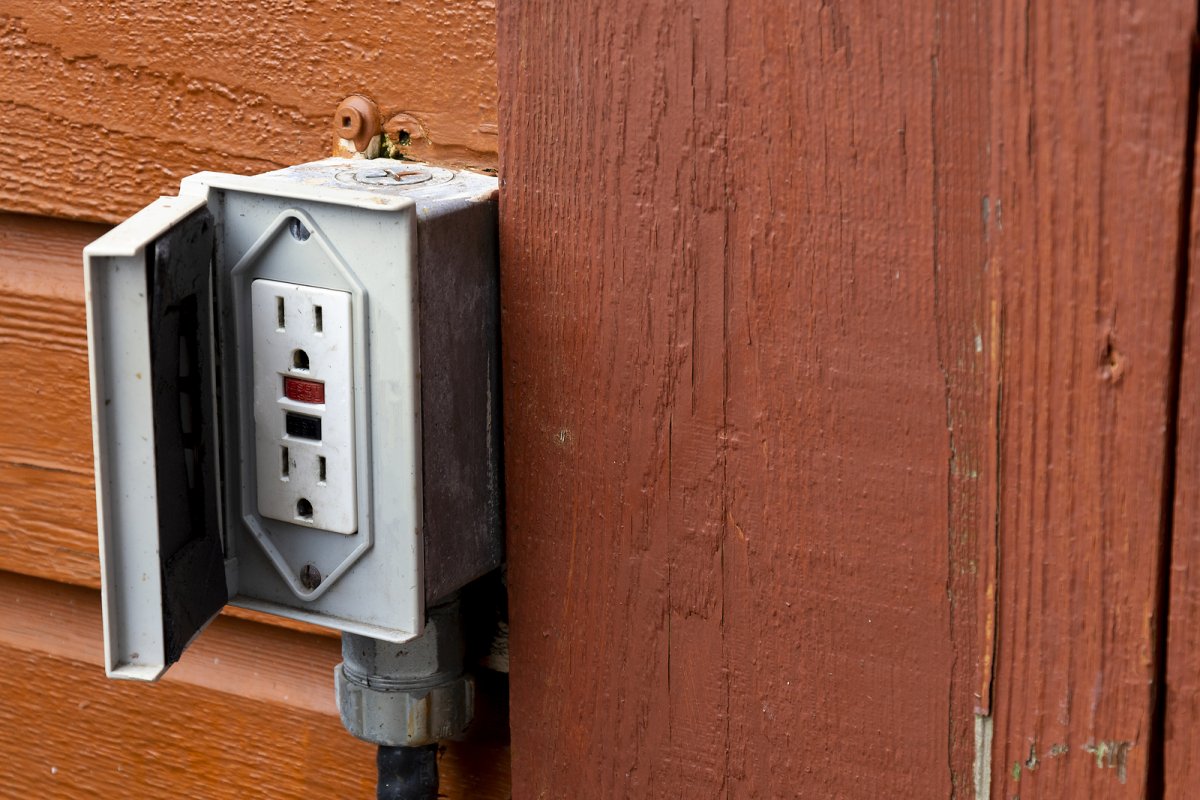
Every outdoor outlet must be GFCI-protected. A GFCI outlet — the kind with the “test” and “reset” buttons — monitors the flow of electricity through the circuit and shuts off power within milliseconds if it detects a ground fault. In an outdoor environment where moisture is always a factor, GFCI protection is what stands between a user and a potentially fatal electric shock.
Outdoor outlets also need to be installed in weatherproof enclosures. Code now requires “in-use” covers — the kind that cover the outlet even when a cord is plugged into it — for outdoor receptacles in exposed locations. A standard cover that only protects an empty outlet doesn’t meet current requirements and leaves the outlet vulnerable to rain and moisture while in use.
Our GFCI outlet installation team installs properly rated outdoor receptacles with appropriate enclosures as a matter of standard practice. We also review our post on GFCI and AFCI protection with customers who want to understand the full picture of how these safety devices work.
Why Permits Matter for Outdoor Electrical Work
Here’s where many homeowners — and unfortunately some unlicensed handymen — cut corners: permits. In New York State, adding an outdoor outlet is electrical work that requires a permit in most jurisdictions, including the City of Binghamton and surrounding towns. A permit triggers an inspection by the local building department, which verifies that the work was done correctly and safely.
Skipping the permit process creates real problems down the road. When you go to sell your home, unpermitted electrical work can surface during the buyer’s inspection and become a negotiating issue or a deal-breaker. Your homeowner’s insurance may also deny a claim related to unpermitted work if it contributed to a fire or other damage. And perhaps most importantly, unpermitted work hasn’t been inspected — so there’s no independent verification that it was done safely.
Albrite Electric handles the permit process as part of every applicable job. We know the permit requirements in Binghamton, Vestal, Endwell, Endicott, Johnson City, and the surrounding communities, and we make sure every installation is done by the book. It’s part of why our customers trust us for long-term work on their homes. You can read about our values and approach on our Why Albrite Electric page.
Special Considerations for Pools, Hot Tubs, and Water Features
Outlets and electrical equipment near pools, hot tubs, and water features are subject to additional NEC requirements that go well beyond standard outdoor outlet rules. There are specific restrictions on how close outlets can be placed to the water’s edge, requirements for bonding and grounding all metal components, and rules about what types of fixtures can be used near water. Getting these details wrong isn’t just a code violation — it’s a genuine electrocution risk.
If you’re installing or upgrading electrical near a pool or hot tub, please work exclusively with a licensed electrician. Our pool and hot tub wiring service covers all of this specialized work, and we recently published a detailed guide on pool and hot tub electrical wiring for homeowners who want to understand the full scope of what’s involved.
Why This Isn’t a DIY Project
We understand the appeal of handling this yourself. Running an outdoor outlet seems straightforward on the surface — drill a hole, run some wire, connect a few terminals. But the combination of code requirements, permit obligations, weatherproofing standards, GFCI requirements, and the need to properly size the circuit and potentially add capacity to your panel makes this genuinely complex work. A mistake in any one of these areas can create a hidden hazard that doesn’t reveal itself until it causes a fire or injures someone.
Our outdoor outlet installation service is straightforward and typically completed in a single visit. We’ll assess the best location, determine whether your existing panel can support the new circuit or whether a circuit breaker upgrade is needed, handle the permit, and install everything to code with proper weatherproofing and GFCI protection.
We also offer security lighting installation and landscape lighting if you’re thinking about a broader outdoor electrical upgrade this spring — many customers combine these projects for a single-trip efficiency.
Ready to get your outdoor spaces properly powered up for summer? Call Albrite Electric at (607) 748-2105 or request your free estimate online. We serve Binghamton, Vestal, Endwell, Johnson City, Endicott, and communities throughout the Southern Tier — and we’re ready to help you enjoy your outdoor spaces all season long.