

Running Power to a Detached Garage, Shed, or Barn? What Underground Electrical Installation Actually Involves
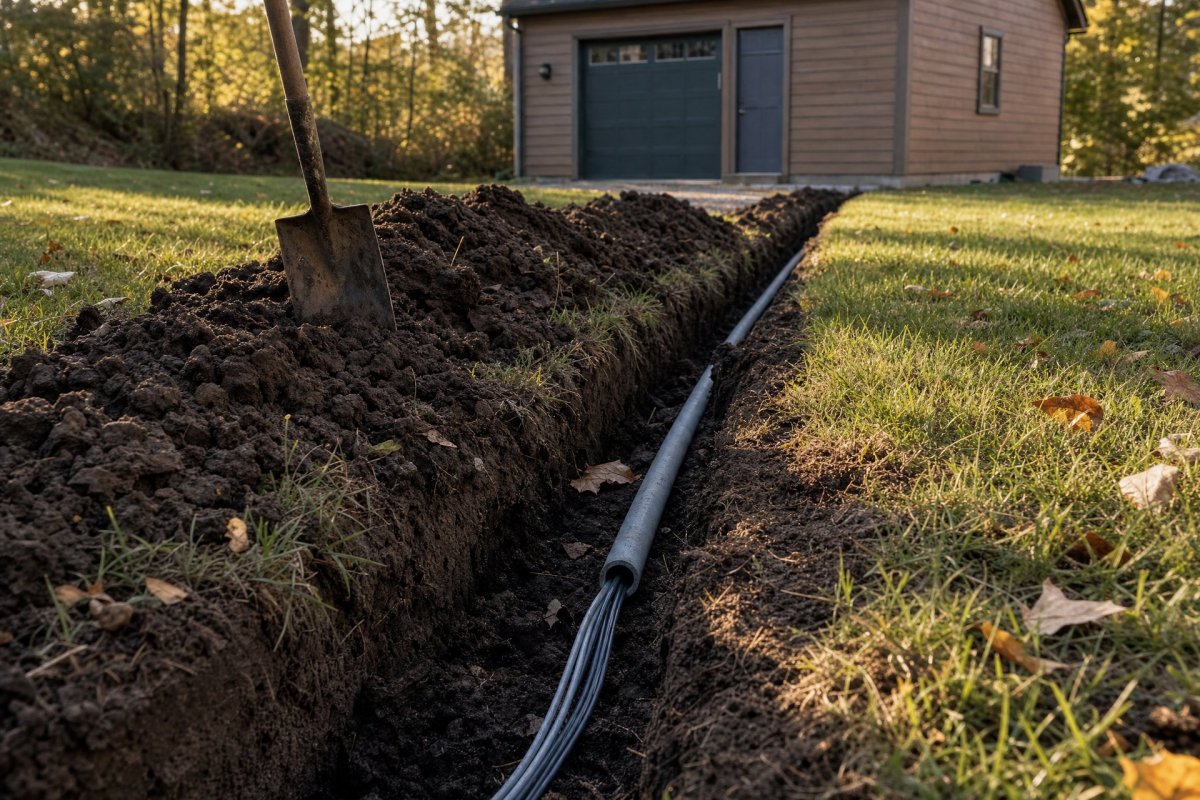
If you own property anywhere from Vestal to Owego, there's a good chance you've got a detached garage, a pole barn, a workshop, or a shed sitting without power — or with power run the wrong way. Homeowners across the Southern Tier often inherit overhead lines strung from the house to an outbuilding, sagging a little more with every winter storm. Others are starting from scratch, trying to figure out how to get electricity to a new structure without turning the yard into a construction site for a month.
Underground electrical installation is one of the most requested, and most misunderstood, projects we handle. Homeowners assume it's "just digging a trench," but there's a lot more involved than a shovel and some wire. In this guide, we'll walk through what underground wiring actually requires, why it's worth the investment over an overhead run, and why September is the ideal window to get it done before the ground starts to freeze.
Why Underground Wiring Beats Overhead Lines for Outbuildings
Overhead lines are cheaper up front, but they come with real downsides in our climate. Ice loading, falling branches, and wind can all take down an overhead run, and a low-hanging line across a driveway or play area is a hazard you'll be reminded of every time you back out the truck. Underground wiring, run in proper conduit, is protected from weather, invisible from the yard, and far less likely to need a repair call five years down the road.
It's also the standard most insurance carriers and municipal inspectors expect to see for new outbuilding service, particularly if that garage or barn is going to carry its own subpanel.
What's Actually Involved in Trenching and Conduit Installation
A proper underground run isn't just wire in the dirt. Depending on the voltage and the local code requirements, the cable needs to sit at a specific burial depth, usually somewhere between 18 and 24 inches, and it needs to run through rigid or Schedule 40 conduit rated for direct burial. The trench has to be routed to avoid septic lines, water lines, and existing utility runs, which means someone has to actually know where those are before the first shovel goes in the ground.
At the outbuilding end, the run typically terminates at a subpanel sized appropriately for what you're planning to run out there, whether that's a few outlets and lights, a welder, or a full workshop setup with dedicated circuits for power tools.
Permits, Utility Locates, and Why This Isn't a Weekend DIY Job
Before any digging happens, New York requires a call to 811 to have all underground utilities marked. Skipping this step risks cutting a gas line or fiber run, which is both dangerous and expensive to fix. Most towns in the Greater Binghamton area also require a permit and inspection for new underground electrical service, particularly when the run ties into your main panel.
This is one of those projects where the visible work, the trench and the wire, is actually the easy part. Sizing the wire correctly for the distance and load, calculating voltage drop over a long run, and making sure the tie-in at your main panel doesn't overload existing capacity all take real electrical knowledge. If you're not sure your panel has room for another circuit, our load calculation guide is a good place to start before you commit to a project.
Common Underground Wiring Projects We See Across the Southern Tier
Detached garages and workshops are the most frequent request, but underground conduit shows up in a lot of other projects too:
- Power to a new pole barn or agricultural building
- Pool and hot tub wiring run from the house to the equipment pad
- Landscape lighting circuits routed underground for a cleaner look
- Outdoor outlets for patios, decks, and driveways
- Dedicated runs for a future EV charging station in a detached garage
If your project involves an outbuilding that used to have overhead power, we can also handle removing the old line and replacing it with a properly buried run, often at the same time we're addressing your outlet installation needs inside.
When to Call a Professional
Underground electrical work is one category where we'd steer almost every homeowner away from a DIY approach. Call a licensed electrician if:
- You're running power more than 50 feet from your main panel
- The run needs to cross a driveway, septic field, or existing utility line
- You're unsure whether your existing panel has capacity for another circuit
- The outbuilding will need its own subpanel rather than a single circuit
- You've had a previous overhead line fail or come down in a storm
An electrician who understands local permitting, like our team serving Owego and Kirkwood, will also know how to plan the trench route around anything the NYSEG service territory requires clearance for, saving you a redo down the line.
Get Your Trench Dug Before the Ground Freezes
Late summer and early fall are the best time to tackle underground electrical work in our area, since frozen ground makes trenching far harder and pushes projects into spring. If you've got a garage, barn, or shed waiting on power, now is the time to get it scheduled. Albrite Electric has been running safe, code-compliant electrical work across the Greater Binghamton area since 1999, and we'll walk you through exactly what your property needs before we ever break ground. Call us at (607) 748-2105 or request a free estimate online to get your underground run planned right.