

Thinking About Adding a Hot Tub This Summer? Here's What Your Electrician Needs to Do First
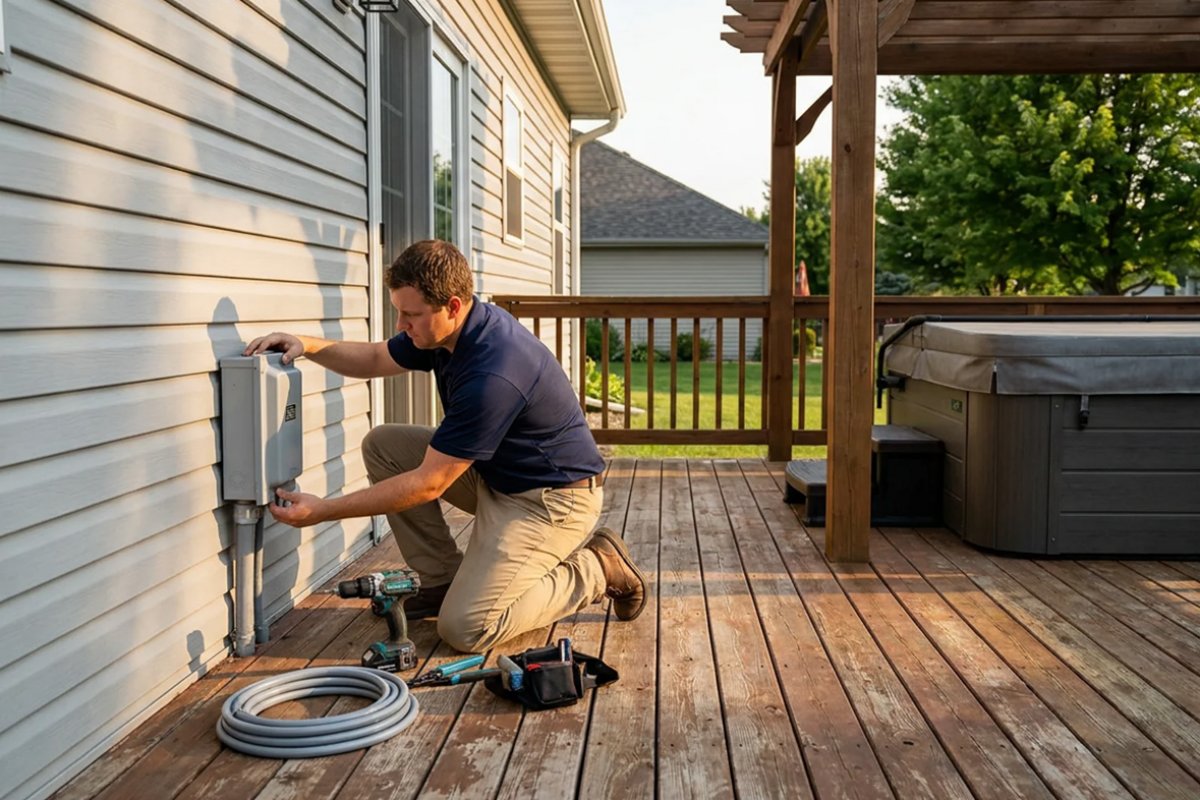
A hot tub in the backyard sounds like the perfect summer upgrade. And for many homeowners in Vestal, Endwell, and across the Greater Binghamton area, it genuinely is. But the conversations that tend to go sideways are the ones that start at the hot tub showroom and end at the electrician’s office—in that order. By the time a homeowner realizes their panel can’t support the new tub, or that the required wiring run is more involved than expected, they’re already committed to the purchase.
Involving a licensed electrician before you buy is the move that saves you money, surprises, and delays. This post walks you through exactly what the electrical side of a hot tub installation involves, what your home needs to support it, and what to watch for during the planning process.
Why Hot Tubs Have Serious Electrical Requirements
Hot tubs are not like most home appliances. A standard 240-volt hot tub draws between 40 and 60 amps continuously when the heater is running—and the heater runs a lot. That level of sustained electrical demand puts hot tubs in the same category as electric dryers, central air conditioning compressors, and other major loads that require dedicated, properly sized circuits.
The National Electrical Code and New York State electrical standards require that every hot tub be connected to a dedicated 240-volt circuit with a GFCI disconnect located within sight of the tub but at least five feet away. That disconnect is a critical safety device. It allows you to cut power to the tub quickly and ensures that any ground fault—an unintended path of electricity that could cause shock—trips the circuit immediately rather than reaching anyone in or near the water.
These aren’t recommendations. They are code requirements, and they need to be installed by a licensed electrician and inspected before the tub is used. Our pool and hot tub wiring service page outlines what’s involved for homeowners ready to move forward.
What Your Electrician Will Evaluate Before Installation
Panel capacity. Adding a 50-amp hot tub circuit to an already loaded panel may require an electrical panel upgrade before anything else can happen. A 100-amp panel in an older home that’s already running central air, a washer and dryer, and a full complement of kitchen appliances may simply not have room. An electrician can determine this quickly by reviewing your panel and performing a load calculation.
The wiring run distance. Where your panel is located relative to where you want the hot tub determines how much wire is needed and what it will cost. A tub on the back patio directly behind the basement panel is a much shorter run than one at the far end of a deck on the opposite side of the house. Longer runs require heavier gauge wire to maintain safe voltage levels over distance.
GFCI protection requirements. The GFCI disconnect mentioned above must be installed by a licensed electrician and positioned correctly relative to the tub. Our post on GFCI and AFCI protection explains how these devices work if you’d like to understand the safety function in more detail.
Grounding and bonding. Beyond the circuit itself, hot tubs require equipotential bonding—a system that connects the tub’s metal components, nearby metal structures, and the electrical system to a common ground potential. This eliminates the voltage differences that can cause electric shock in and around the water. It’s a specialized requirement that many general contractors are not equipped to handle correctly.
Common Planning Mistakes to Avoid
The majority of hot tub electrical problems Albrite Electric encounters come from one of three scenarios: the homeowner bought the tub before consulting an electrician, a handyman or unlicensed contractor attempted the wiring, or the installation was done years ago and never properly inspected.
Extension cords are an immediate disqualifier. A hot tub should never be powered by an extension cord under any circumstances. The continuous high load will overheat any extension cord not specifically rated for the purpose, and no standard household extension cord is rated for it. Similarly, using a standard outlet with an adapter is not a safe workaround for smaller plug-and-play hot tubs—even those units need to be on circuits that can handle their load without sharing power with other devices.
For more context on how outdoor electrical work should be approached in general, our post on outdoor electrical for patios and decks covers the broader considerations, including weatherproofing requirements and outlet placement.
What the Installation Process Looks Like
Once your electrician has assessed your home and confirmed the panel can support the new circuit (or upgraded it as needed), the installation itself is typically completed in a single day. The main steps involve running conduit from the panel to the hot tub location, pulling the appropriate gauge wire through the conduit, installing the GFCI disconnect box, completing the bonding requirements, and connecting everything at the panel with a dedicated double-pole breaker.
After installation, the work needs to be inspected by the local authority having jurisdiction before the tub is energized. Your electrician handles the permit and coordinates the inspection. Attempting to use the tub before it passes inspection is both a code violation and a genuine safety risk.
Albrite Electric has been handling pool and hot tub wiring for homeowners throughout the Greater Binghamton area since 1999. We know the local permit requirements, we work cleanly and efficiently, and we explain every step of the process before we begin. You can read more about hot tub and pool electrical wiring in our detailed guide, or visit our pages for Vestal, Endwell, and Conklin to learn more about service in your area.
Frequently Asked Questions About Hot Tub Electrical Installation
The cost depends on the distance of the wiring run from your panel, whether a panel upgrade is required, and any site-specific factors like trenching for underground conduit. A straightforward installation with a panel that has available capacity typically runs in the range of $500 to $1,500 for the electrical work alone. If a panel upgrade is needed, that adds to the total. We provide clear, detailed estimates before any work begins. Request your free estimate or call us at (607) 748-2105.
Yes. Hot tub electrical installations require a permit in New York State, and the work must be inspected before the tub is used. A licensed electrician will pull the required permits and schedule the inspection as part of the job. Skipping this step creates liability issues and can cause problems if you ever sell your home.
Plug-and-play hot tubs are designed to run on a standard 120-volt outlet and typically have lower heating power and fewer features than hardwired 240-volt models. Even plug-and-play tubs should be on a dedicated circuit to prevent overloading. Hardwired 240-volt tubs are the more capable and more common choice for permanent installations, and they always require a dedicated circuit installed by a licensed electrician with a GFCI disconnect.
For most standard hot tub installations where the panel already has capacity, the electrical work is typically completed in one day. If panel upgrades or longer conduit runs through finished walls or underground trenching are involved, the timeline may extend to two days. We’ll give you a realistic timeline as part of your estimate so you can plan accordingly.
Ready to make that backyard upgrade a reality this summer? Talk to Albrite Electric first and you’ll avoid the most common (and costly) planning mistakes. Call us at (607) 748-2105 or request your free estimate online. We’ll make sure your hot tub is wired safely, to code, and ready to enjoy all season long.