

Generac Generator Buying Guide for First-Timers: What Binghamton Homeowners Ask Before They Buy
After the last major ice storm knocked out power to thousands of Greater Binghamton homes for four or five days, a lot of homeowners started taking the idea of a standby generator seriously. Maybe you were one of them — stuck without heat in January, watching your refrigerator warm up, and realizing that your “we’ll figure it out” approach to power outages had run its course.
The problem is that once you start researching home standby generators, it can feel overwhelming fast. Kilowatts, transfer switches, load calculations, natural gas versus propane — the terminology alone is enough to make most homeowners close the browser tab and wait for another outage to motivate them again. That’s a cycle worth breaking.
This guide is designed for Greater Binghamton homeowners who are serious about buying a home standby generator for the first time and want straight answers before they start the process. Albrite Electric has been installing Generac home standby generators across the Southern Tier since 1999, and we’ve answered these questions more times than we can count.
How a Home Standby Generator Is Different From a Portable Generator
Most people have some experience with portable generators — the kind you roll out of the garage, fill with gas, and run extension cords to during an outage. They’re useful in a pinch, but they have serious limitations: you have to be home when the power goes out, you have to refuel them every few hours, they can’t power your whole house, and they require keeping gasoline on hand (with all the safety concerns that involves).
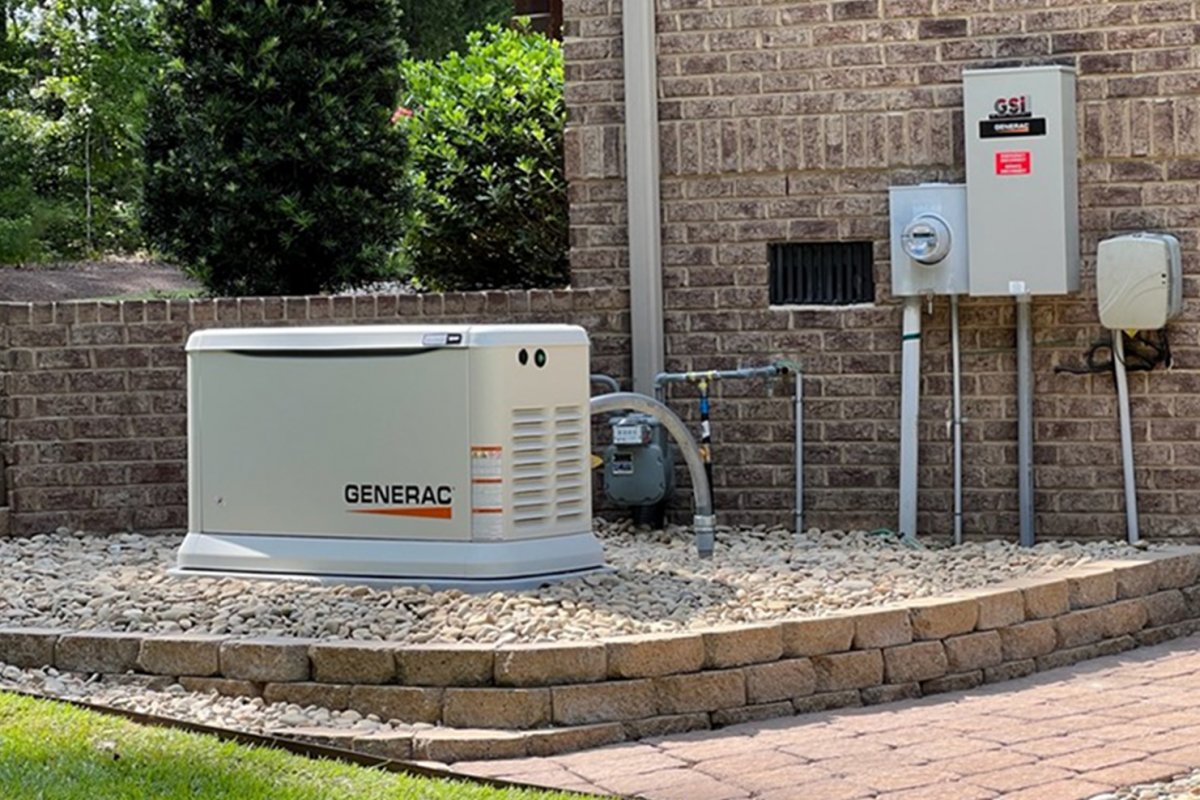
A home standby generator is a permanently installed appliance — similar in concept to a central air conditioner sitting outside your home. It’s connected directly to your home’s electrical system and to a natural gas or propane fuel supply. When it detects that utility power has been lost, it starts automatically within seconds and restores power to your home without any action on your part. When utility power returns, it shuts off automatically. You can be away on a trip when the outage happens and come home to a house that never lost power.
For homeowners with medical equipment, elderly family members, home offices, or freezers full of food, that automatic, hands-off operation is the key difference maker. Our post on whether a whole-house generator is right for you explores this comparison in more depth.
How Big a Generator Do You Actually Need?
Generator sizing is one of the most common sources of confusion — and one of the most important decisions in the buying process. Buy too small and you won’t be able to run everything you need during an outage. Buy too large and you’re spending more than necessary on equipment and installation.
Generator capacity is measured in kilowatts (kW). Generac’s home standby line ranges from a 7.5 kW PowerPact designed for essential circuits only, up to 26 kW units capable of powering a large home completely. The right size for your home depends on what you want to power during an outage.
There are two basic approaches to sizing. The first is essential circuit coverage — protecting your furnace, refrigerator, a few lights, and other critical loads, which typically requires a generator in the 10–14 kW range for most average Greater Binghamton homes. The second is whole-home coverage, which powers everything in your house as if the utility were still on. Whole-home coverage for a typical 1,800–2,500 square foot home generally requires an 18–22 kW generator, though homes with electric heat, multiple HVAC systems, or large appliances may need more capacity.
A proper sizing calculation requires a load analysis of your home — adding up the running and starting wattage of everything you want to power. This is something a licensed Generac dealer like Albrite Electric does as part of the estimation process. Our detailed generator sizing guide for Binghamton homeowners is a good starting point for understanding the math before your consultation.
Natural Gas or Propane: Which Fuel Source Is Right for You?
Home standby generators run on either natural gas (piped in from your utility) or propane (stored in an outdoor tank). Each has advantages, and the right choice depends heavily on what’s available at your property.
Natural gas is the preferred fuel when available — it’s delivered continuously through the utility line, so you never have to worry about running out during an extended outage. If your home is already on natural gas for heating or cooking, connecting a generator to that supply line is typically straightforward. The downside is that if a major storm damages gas infrastructure (rare but possible), your generator fuel supply could be interrupted along with everything else.
Propane is the practical choice for homes outside natural gas service areas — which includes a significant portion of the rural and semi-rural communities around Greater Binghamton. With a properly sized propane tank (100–500 gallons is common for generator use), you have a known fuel supply on-site that’s independent of the utility grid. The trade-off is that you need to monitor tank levels and arrange refills proactively, especially heading into winter. Our post comparing natural gas versus propane generators covers this decision in detail with specific considerations for the Binghamton area.
What Does Installation Actually Involve?
One of the questions we hear most often from first-time buyers is: “How disruptive is the installation process?” The honest answer is: less than most people expect. Most Generac home standby generator installations in the Greater Binghamton area are completed in a single day by our team.
The process involves selecting and preparing a site for the generator (typically a concrete pad or gravel bed outside the home, with required clearances from windows, doors, and utilities), installing the automatic transfer switch (which connects the generator to your home’s electrical panel), running the fuel line from your natural gas meter or propane tank, and final testing to confirm everything works correctly before we leave. We handle all required permits and coordinate with NYSEG when utility coordination is needed.
What to expect after installation: your generator will run a brief automatic self-test once a week (typically on a day and time you can set) to confirm it’s ready to operate. Annual maintenance — oil change, filter replacement, spark plugs — keeps it in top condition. Our Generac generator maintenance service handles this for you on a scheduled basis. For a full walkthrough of what to expect, read our post on what happens during a whole house generator installation.
What Does a Home Standby Generator Cost?
Generator pricing includes both the equipment and the installation, and both vary based on the size of the unit and the specifics of your site. As a general range, installed costs for a home standby generator in the Greater Binghamton area run from roughly $5,000–$8,000 for a smaller essential-circuit system up to $12,000–$18,000 or more for a large whole-home system with a full-house transfer switch. The best way to get an accurate number is to schedule a free on-site estimate.
Many homeowners find that when they add up the cost of hotel stays, spoiled food, emergency repairs (burst pipes, sump pump failures during outages), and the general disruption of multi-day outages, the investment in a standby generator pays for itself in avoided costs over time. Our post on how a generator can pay for itself lays out this analysis in detail.
A natural gas generator connected to utility gas can run indefinitely as long as the gas supply is available — there’s no fuel tank to empty. A propane generator can run as long as your tank supply lasts, which depends on the generator’s load and your tank size. Generac recommends oil changes after 200 hours of continuous operation, so for very extended outages (a week or more), a maintenance check is a good idea. For most Greater Binghamton outage scenarios — storms lasting a day to several days — fuel supply is rarely the limiting factor with a properly set up system.
Yes, in most cases. Real estate data consistently shows that homes with standby generators sell faster and command a price premium, particularly in markets like Greater Binghamton where power outages are a known seasonal concern. Buyers who have experienced outage disruption — or who work from home or have family members with medical needs — often actively seek homes with backup power already installed. It’s one of the few home upgrades that provides both immediate quality-of-life benefit and long-term resale value. Learn more in our post on the ultimate Generac buyer’s guide for Greater Binghamton homeowners.
Annual maintenance is recommended for most home standby generators, similar to a furnace tune-up. This typically includes an oil and filter change, spark plug inspection or replacement, battery check, and a full operational test. Generac generators also perform their own brief weekly self-test automatically — you’ll hear it run for a few minutes, which is completely normal. Albrite Electric offers scheduled generator maintenance so you don’t have to worry about remembering. Our generator maintenance checklist is also a helpful reference between professional service visits.
Yes — generator installations require electrical permits and, in most cases, a gas or plumbing permit for the fuel line. Albrite Electric handles the full permitting process as part of every installation, so you don’t have to navigate municipal requirements on your own. We’re familiar with the permit requirements across all of our service communities, including Binghamton, Vestal, Endicott, Endwell, Johnson City, and surrounding towns. Request a free estimate to get started.
Yes. We service Generac home standby generators regardless of who installed them. If you’ve moved into a home with an existing generator, or if your previous installer is no longer in business or available, we can take over maintenance and service. Give us a call at (607) 748-2105 and we’ll get your generator on our service schedule.
A home standby generator is one of the most practical investments a Greater Binghamton homeowner can make — and it’s a lot less complicated than it might seem once you have the right information. When you’re ready to take the next step, call Albrite Electric at (607) 748-2105 or request your free estimate online. We’ll walk you through sizing, fuel options, and installation so you can make a confident decision. Serving Binghamton, Vestal, Owego, Endicott, and all of the Southern Tier since 1999.